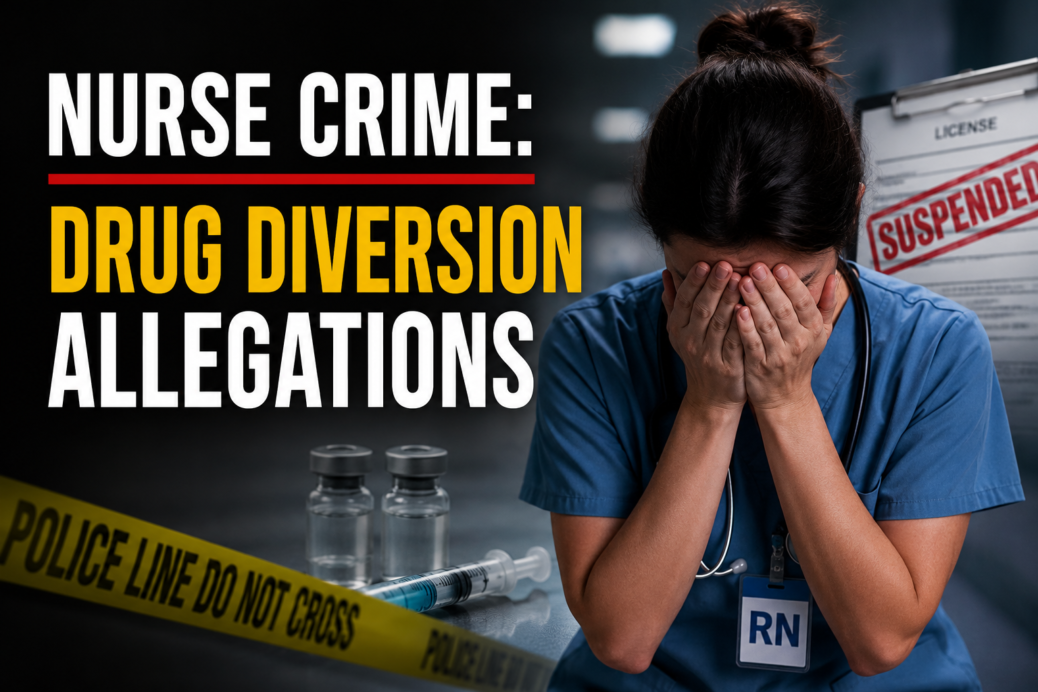
Nurse Crime: B.C. Nurse Suspended Amid Drug Diversion Allegations Under Investigation
A nurse in British Columbia has had their licence suspended after serious allegations of drug diversion surfaced — a case that is now drawing attention across Canada’s healthcare community.
According to reports, the British Columbia College of Nurses and Midwives (BCCNM) has taken immediate action while investigating claims that the nurse may have improperly diverted controlled medications over a 14-month period between February 2025 and April 2026.
For nurses, this is the kind of story that raises uncomfortable but important questions.
Because when controlled substances go missing, the consequences stretch far beyond one individual.
It affects patient safety.
It affects team trust.
And it affects the public’s confidence in nursing.
What Is Drug Diversion?
Drug diversion happens when prescribed medications — often narcotics or controlled substances — are taken, misused, or redirected for unauthorized purposes.
In healthcare, this is one of the most serious professional violations.
Why?
Because it puts patients at direct risk.
A patient expecting pain relief may receive less medication than ordered.
Or none at all.
In some cases, medications may be replaced or documentation altered.
That can lead to:
- untreated pain
- delayed recovery
- withdrawal symptoms
- medication errors
- serious patient harm
That is why nursing regulators treat these allegations with urgency.
What Happened in This Case?
The BCCNM says the allegations involve a northern B.C. nurse and span over a year.
At this stage, the allegations remain under investigation, and no criminal conviction has been reported.
But the regulatory body determined the concerns were serious enough to suspend the nurse’s licence while the investigation continues.
That’s significant.
Regulators do not suspend lightly.
An interim suspension usually means they believe there may be an immediate risk to the public.
This is not just about punishment.
It’s about prevention.
Why Drug Diversion Cases Matter So Much in Nursing
Controlled medications are some of the most tightly monitored drugs in healthcare.
Nurses handle them daily:
- opioids
- benzodiazepines
- sedatives
- stimulants
That access comes with enormous responsibility.
And unfortunately, nursing can be a high-risk profession for substance misuse.
Not because nurses are careless.
But because nursing is intense.
Long shifts.
Burnout.
Trauma.
Chronic stress.
Emotional exhaustion.
For some, unhealthy coping mechanisms can begin quietly.
What starts as stress relief can become dependency.
And dependency can become diversion.
This doesn’t excuse it.
But it helps explain why these cases happen.
The Hidden Crisis: Addiction in Nursing
This story highlights a difficult truth:
Addiction exists in nursing.
And many don’t talk about it.
There is often fear:
- fear of losing a licence
- fear of judgment
- fear of career destruction
- fear of public shame
So many suffer in silence.
By the time diversion is discovered, the problem may have been developing for months or years.
This is why many nursing boards now have rehabilitation pathways alongside discipline.
Because protecting patients is priority — but recovery matters too.
Why This Matters for Nurses Everywhere
Every time a nurse is linked to crime, it impacts the profession.
It reinforces public scrutiny.
It creates mistrust.
And it places pressure on honest nurses who show up every day with integrity.
For international nurses especially, these stories can feel even heavier.
Many are already navigating:
- strict licensure requirements
- cultural adaptation
- extra scrutiny
- professional barriers
Cases like this remind us how important ethical practice is.
One mistake can cost everything.
Not just a job.
A career.
A reputation.
A future.
Lessons Every Nurse Should Take From This
There are serious takeaways here:
1. Protect your licence at all costs
Your licence is your livelihood.
Guard it.
2. Ask for help early
If you’re struggling mentally, emotionally, or with substance use, seek help before it escalates.
3. Follow medication protocols strictly
Never cut corners.
Ever.
4. Speak up
If something feels off on your unit, report it.
Silence protects problems.
Final Thoughts
This case is still under investigation, and the full facts will come out in time.
But one thing is clear:
Drug diversion is one of the fastest ways to destroy trust in nursing.
And trust is everything in this profession.
For the thousands of nurses working honestly across Canada and beyond, this story is another reminder that nursing is not just skill.
It is accountability.
It is ethics.
It is stewardship.
And when that breaks, the consequences are far-reaching.