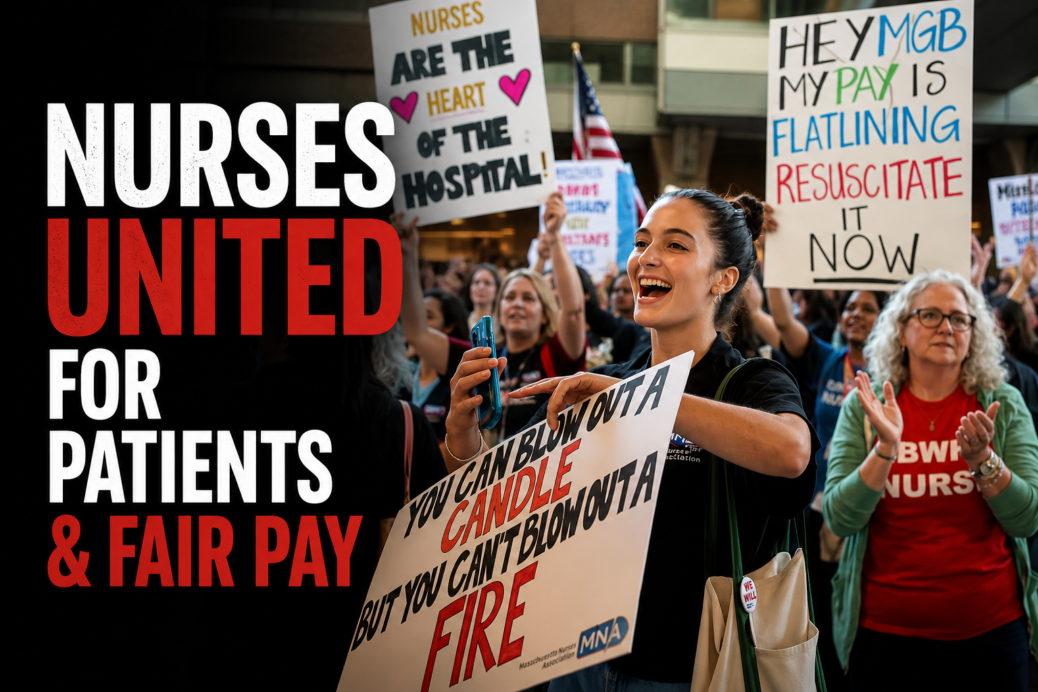
Historic Massachusetts Nurses’ Strike Enters Day One as More Than 4,400 Healthcare Workers Walk Off the Job
More than 4,400 nurses and home healthcare clinicians employed by Mass General Brigham (MGB) walked off the job Wednesday in what has become the largest nurses’ strike in Massachusetts history, escalating a months-long contract dispute over wages, staffing, and patient safety.
The industrial action involves approximately 4,000 registered nurses at Brigham and Women’s Hospital and another 450 clinicians working for Mass General Brigham Home Care, with thousands gathering on picket lines outside hospitals and healthcare facilities across the state.
The strike affects Brigham and Women’s Hospital’s flagship campus in Boston’s Longwood Medical Area, as well as MGB facilities in Foxborough, Somerville, Newton, Beverly, and several home healthcare locations.
Nurses Say Patient Care Has Been Ignored
The strike follows months of unsuccessful contract negotiations between Brigham and Women’s Hospital and the Massachusetts Nurses Association (MNA).
Union leaders say the dispute goes far beyond pay.
According to the MNA, nurses have repeatedly raised concerns about staffing shortages, employee retention, and the hospital’s unwillingness to invest in frontline healthcare workers despite growing patient demand.
Kelly Morgan, a labor and delivery nurse and chair of the Brigham bargaining committee, accused hospital executives of failing to listen to nurses.
She said nurses had been forced into strike action after months of negotiations produced little progress, arguing that the current proposals would make it harder to recruit and retain experienced nurses.
“Our fight is about protecting our patients, our profession, and the future of nursing care,” union leaders said during Wednesday’s demonstrations.
Hospital Implements Five-Day Lockout
Although nurses voted to conduct a one-day strike, Brigham and Women’s Hospital announced it would enforce a five-day lockout, meaning striking nurses will not be allowed to return to work until July 13.
Hospital officials said the decision was necessary because of the extensive planning required to maintain uninterrupted patient care after bringing in replacement staff.
Meanwhile, the 450 home healthcare clinicians represented by the union have launched a seven-day strike, scheduled to continue until July 15.
Nearly 1,500 Replacement Workers Brought In
To keep hospital operations running, Mass General Brigham has hired approximately:
- 1,300 temporary replacement nurses
- More than 175 replacement home healthcare clinicians
Hospital officials insist Brigham and Women’s remains fully operational despite the strike.
Patients have been advised to attend scheduled appointments unless contacted directly by their care teams.
MGB says it has spent months preparing contingency plans to minimise disruptions to patient care throughout the strike.
Massachusetts Governor Steps In
As tensions escalated, Massachusetts Governor Maura Healey personally intervened.
On Wednesday afternoon, Healey called both Mass General Brigham executives and Massachusetts Nurses Association representatives to the State House for emergency discussions aimed at restarting negotiations.
Following the meeting, Healey urged both sides to continue bargaining in good faith.
She stressed that reaching an agreement is essential to protecting patients while ensuring nurses receive fair wages and benefits.
Despite the meeting, no agreement was reached.
The nurses’ union later said it remained ready to return to the bargaining table at any time if meaningful negotiations resumed.
Union Raises Concerns About Replacement Staff
Following the governor’s meeting, union representatives expressed concern about patient safety during the strike.
The Massachusetts Nurses Association claimed it had received reports from nurses and patients alleging staffing shortages and concerns about whether all temporary replacement nurses were adequately prepared for their assignments.
The union argues that continuity of care suffers when experienced nurses familiar with hospital systems and patients are replaced by temporary staff.
Hospital leaders have strongly disputed suggestions that patient care is unsafe.
Hospital Defends Its Contract Offer
Mass General Brigham says its latest contract proposal represents a substantial investment in its nursing workforce.
According to hospital officials, the offer includes:
- Continued 5% wage increases across most of the nursing pay scale.
- 2.5% increases for nurses already at the highest pay level.
- A benefits package valued at approximately 30% of total compensation, including:
- Health insurance
- Retirement contributions
- Paid time off
- Tuition assistance
Hospital leaders argue that the overall compensation package remains among the strongest in the region.
They also warned that accepting the union’s wage proposal would increase annual nursing salary and benefit costs from approximately $746 million to $920 million, representing nearly half of all hospital labor expenses.
According to MGB, those costs could threaten the hospital’s long-term financial sustainability.
Nurses Say Cost of Living Is the Real Issue
Union leaders disagree.
The MNA says the hospital’s proposals fail to address the dramatic increase in living costs across Massachusetts.
They argue that while inflation has driven up housing, transportation, childcare, and everyday expenses, nurses have effectively received no meaningful cost-of-living increases during negotiations.
The union is also seeking:
- Competitive wage increases.
- Affordable health insurance.
- Stronger protections for patient care services.
- Better recruitment and retention strategies.
- Improved staffing levels.
During Wednesday’s demonstrations, many picket signs also highlighted executive compensation.
The union noted that Mass General Brigham’s top 14 executives earned a combined $35.9 million during fiscal year 2024, including $8.4 million paid to CEO Dr. Anne Klibanski.
Many nurses questioned why the hospital could afford millions in executive pay while refusing to meet union demands.
Nurses Describe Burnout and Frustration
Several nurses shared emotional stories about the impact of the dispute.
Cath lab nurse Bana Kahale said she regularly works more than 40 hours each week, including extended on-call shifts lasting nearly 24 hours while caring for critically ill patients.
She criticised hospital leadership for spending significant sums on temporary replacement nurses instead of investing in permanent staff.
Other nurses expressed disappointment that negotiations had reached the point of a strike, saying the dispute could have been resolved months ago.
Many also voiced concern for patients who would now receive care from unfamiliar temporary staff.
One veteran nurse described having to tell a young patient that she would not be returning because of the strike, calling it one of the hardest conversations of her career.
Political Leaders Rally Behind Nurses
The strike received widespread support from elected officials.
Among those backing the nurses were:
- Senator Elizabeth Warren
- Senator Ed Markey
- Representative Ayanna Pressley
- Representative Stephen Lynch
- Boston Mayor Michelle Wu
In a joint statement, the officials praised nurses as the backbone of the healthcare system and called on Mass General Brigham to negotiate a fair agreement reflecting nurses’ essential contributions.
What Happens Next?
Negotiations remain ongoing, and both sides have indicated they are willing to continue discussions.
Whether a deal is reached before the lockout ends remains uncertain.
For now, thousands of nurses remain on picket lines, insisting that their fight is about more than wages—it is about protecting patient care, improving staffing, and securing the future of nursing at one of America’s leading academic medical centers.





[…] nurses’ planned 24-hour strike ended at 7 a.m. Thursday, and about 4,000 Brigham and Women’s Hospital nurses attempted to return to […]