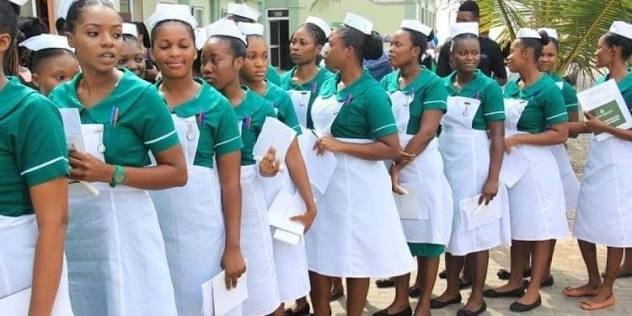
47 Ghanaian Nurses Depart for St. Kitts and Nevis Under Government Migration Programme
Forty-seven Ghanaian health professionals have officially departed for Saint Kitts and Nevis under the government’s Health Workforce Migration Initiative, marking the second batch of healthcare workers to benefit from the programme.
The latest group consists of 15 community health nurses and 32 general nurses, all deployed under Ghana’s labour export programme aimed at creating regulated overseas employment opportunities for trained health professionals while addressing unemployment in the health sector.
The initiative forms part of a broader strategy by the Ministry of Health Ghana to reduce the growing backlog of unemployed nurses and other health workers while building formal partnerships with countries facing healthcare workforce shortages.
This latest deployment follows a bilateral labour agreement signed between Ghana and Saint Kitts and Nevis in March 2026, establishing a formal pathway for Ghanaian nurses to be recruited and employed abroad.
Speaking ahead of the nurses’ departure, Deputy Health Minister Grace Ayensu-Danquah said the programme is part of government’s wider response to the increasing number of qualified health workers who remain unemployed despite years of training.
According to her, the government has already begun recruiting healthcare workers from the 2021 graduate cohort, with plans to absorb about 25,000 workers this year, but acknowledged that a significant backlog still remains.
She revealed that beyond St. Kitts and Nevis, Ghana has received interest from at least 14 countries seeking bilateral agreements to recruit Ghanaian nurses and health professionals.
Dr. Ayensu-Danquah described the migration programme as a practical way of “thinking outside the box” to provide employment while also maintaining cooperation with international partners.
Addressing the nurses directly, she encouraged them to uphold Ghana’s strong nursing reputation by maintaining professionalism, discipline, and ethical standards while abroad.
She reassured them that systems have been put in place to support their welfare and urged them to report any challenges early.
She also emphasised that Ghana’s nursing education continues to receive global recognition, which is one of the reasons international governments are actively seeking Ghanaian-trained nurses.
The departing nurses expressed excitement about the opportunity, describing it as both a career breakthrough and a chance to represent Ghana on the international stage.
Some said they had long hoped for opportunities to work abroad and improve their professional skills, while others saw it as a chance to gain exposure to different healthcare systems and return with valuable experience.
One nurse shared that after working six years in Ghana — including four years in the public sector — the opportunity felt like a major career advancement.
Another described the move as proof that Ghanaian nurses continue to be respected globally for the quality of care they provide.
Officials also reminded the nurses that while they are leaving to work abroad, the expectation is that many will return with enhanced knowledge and expertise to contribute back to Ghana’s healthcare system.
The Health Workforce Migration Initiative has sparked mixed reactions in Ghana.
While many see it as a positive step in reducing unemployment and creating structured migration pathways, some health experts continue to raise concerns about brain drain and the long-term impact on Ghana’s already stretched healthcare system.
However, government officials maintain that the programme is carefully managed through bilateral agreements designed to balance workforce exports with domestic recruitment.
Authorities say additional groups of healthcare workers are expected to depart before the end of the year as negotiations with other countries continue.
The initiative highlights Ghana’s growing role as a supplier of skilled nursing professionals to the global healthcare market, especially as countries in Europe, the Caribbean, and North America continue facing critical nursing shortages.
For many of the nurses leaving, it is more than a job opportunity — it is a chance to build careers, support families, and carry Ghana’s reputation into international healthcare spaces.