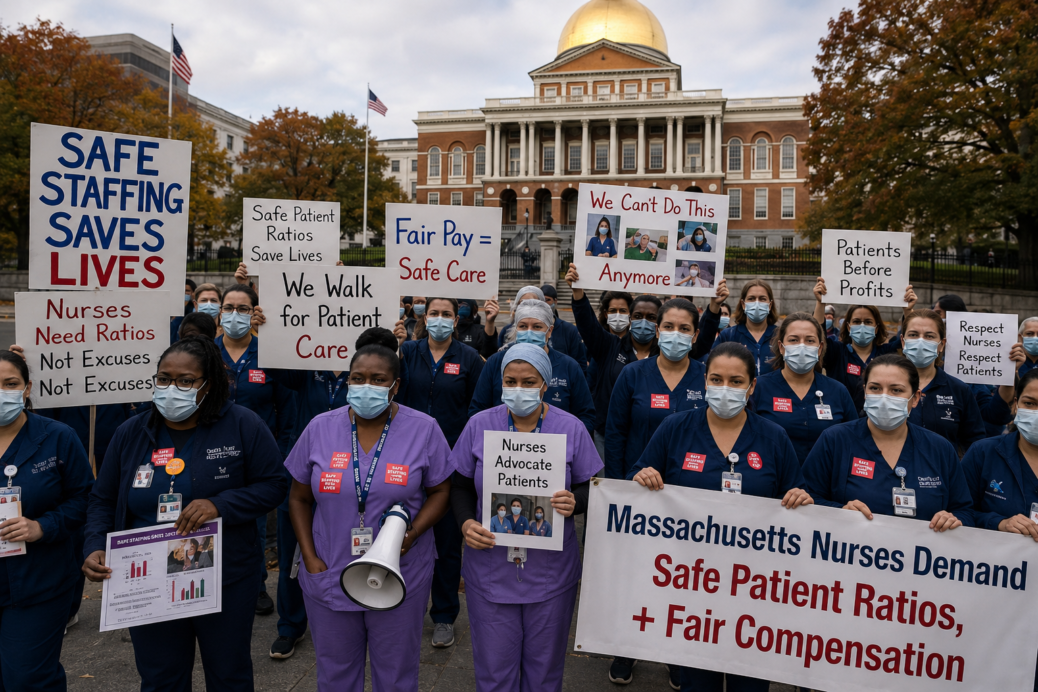
More Than 4,000 Brigham and Women’s Nurses to Stage Historic Strike After Contract Talks Collapse
More than 4,000 registered nurses at Brigham and Women’s Hospital are preparing to walk off the job in what the Massachusetts Nurses Association says will be the largest healthcare worker strike in Massachusetts history.
The one-day strike is scheduled for Wednesday after months of contract negotiations between the union and hospital management failed to produce an agreement. Union leaders say the decision follows a breakdown in talks over wages and other key workplace issues.
The strike will involve more than 4,000 nurses who work at one of Boston’s largest and most prestigious teaching hospitals.
Brigham and Women’s Hospital is part of the Mass General Brigham, one of the largest healthcare systems in the United States and a major teaching affiliate of Harvard Medical School. The hospital is nationally recognised for specialised care in cancer, cardiology, neuroscience, women’s health, trauma, and organ transplantation.
According to the Massachusetts Nurses Association, the central issue in negotiations is cost-of-living pay increases.
Union officials argue that while inflation has driven up housing, childcare, transportation, and everyday living costs throughout Massachusetts, nurses’ wages have not kept pace.
They say competitive salaries are essential not only for retaining experienced nurses but also for recruiting new staff in an increasingly competitive healthcare labour market.
The dispute comes after months of bargaining between hospital management and union representatives.
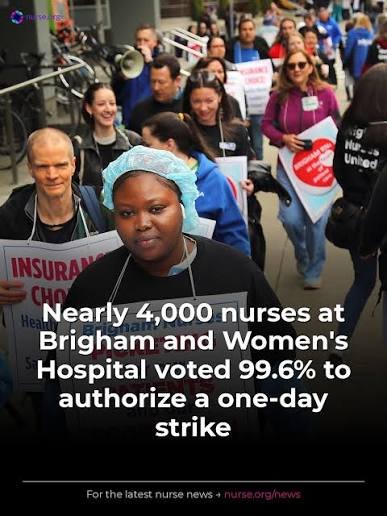
Earlier this year, nurses overwhelmingly voted to authorise strike action if negotiations failed.
That vote, which passed by 2,798 to 12, gave union leaders authority to schedule a strike if necessary, although both sides continued negotiating in hopes of reaching an agreement.
With talks now at an impasse, the strike is moving forward.
The Massachusetts Nurses Association says the action is intended to pressure hospital leadership into reaching a fair contract that addresses nurses’ economic concerns while helping improve long-term workforce stability.
Hospital administrators have not publicly released full details of their latest contract proposal.
However, healthcare systems across the country continue to face growing financial pressures, including rising labour costs, inflation, supply expenses, and increased demand for patient care.
Like many hospitals nationwide, Brigham and Women’s has also faced ongoing staffing challenges since the COVID-19 pandemic.
Across the United States, nurse shortages remain one of healthcare’s biggest workforce issues.
Many experienced nurses have retired early, changed careers, or reduced working hours because of burnout and workload pressures.
At the same time, hospitals continue competing for a limited pool of qualified nurses.
Union leaders argue that competitive wages are one of the most effective ways to retain experienced staff and reduce costly turnover.
The planned strike also reflects a broader national trend.
Over the past several years, nurses across the United States have increasingly organised industrial action over pay, staffing, workplace violence, and patient safety concerns.
Major strikes have taken place in states including California, New York, Minnesota, Oregon, and Kansas, with many ending in contracts that included higher wages and improved staffing commitments.
Massachusetts has also experienced several recent nursing labour disputes, but the Brigham and Women’s action is expected to surpass previous actions in size.

Despite the strike, hospital officials say patient care will continue.
Healthcare systems typically activate contingency plans during labour disputes, including bringing in temporary replacement nurses, rescheduling some elective procedures, and prioritising emergency and critical care services.
Patients with upcoming appointments are expected to receive updates directly from the hospital if any changes become necessary.
For many nurses, however, the decision to strike was not taken lightly.
Healthcare workers often describe strikes as a last resort after negotiations fail, particularly because nurses remain committed to patient care.
Union representatives insist their goal is not to disrupt healthcare but to secure a contract they believe reflects nurses’ contributions and helps maintain safe, sustainable staffing for the future.
Whether negotiations resume before the strike begins remains unclear.
Both sides could still reach a tentative agreement at the last minute, as has happened during previous contract disputes in Massachusetts.
For now, however, thousands of nurses are preparing for what could become one of the most significant labour actions in the state’s healthcare history.







[…] than 4,400 nurses and home healthcare clinicians employed by Mass General Brigham (MGB) walked off the job Wednesday in what has become the largest […]