U.S. Hospitals Are Hiring Remote Nurses in the Philippines—Could Virtual Nursing Change Healthcare Forever?
A growing number of U.S. hospitals are turning to remote nurses and healthcare professionals based in the Philippines to help address persistent staffing shortages, reduce administrative burdens, and support bedside nurses.
The trend, often referred to as virtual nursing or remote nursing support, is transforming how hospitals deliver care. While supporters believe it could ease America’s ongoing nursing shortage, critics warn it also raises important questions about patient safety, privacy, job outsourcing, and the long-term impact on the Philippines’ own healthcare workforce.
A New Kind of Nursing Job
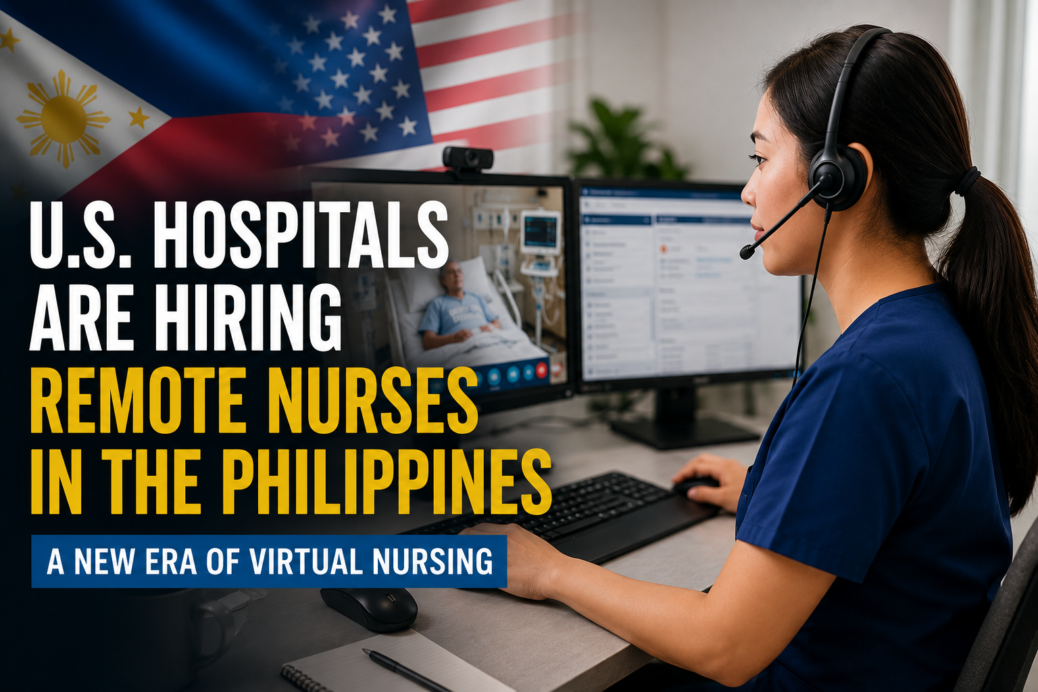
Unlike traditional travel nursing or international recruitment programs that require nurses to relocate to the United States, these new roles allow healthcare professionals to remain in the Philippines while supporting American hospitals remotely.
Using secure video systems and electronic health records, remote healthcare workers assist U.S. clinical teams with tasks such as:
- Monitoring ICU patients through cameras
- Watching high-risk patients to prevent falls
- Reviewing medical records
- Coordinating patient transfers
- Calling patients before and after appointments
- Checking insurance eligibility
- Updating clinical documentation
- Supporting bedside nurses with administrative work
Most virtual workers are not independently treating patients. Instead, they act as an extension of the on-site care team, communicating concerns to bedside nurses and physicians who make clinical decisions.
Helping Address America’s Nursing Shortage
The United States continues to face a significant shortage of registered nurses.
Hospitals across the country have struggled with vacancies since the COVID-19 pandemic, while an aging population continues to increase demand for healthcare services.
Virtual nursing has emerged as one possible solution.
Rather than replacing bedside nurses, hospitals say remote teams can reduce paperwork and administrative tasks, allowing nurses on the unit to spend more time providing direct patient care.
Why the Philippines?
The Philippines has long been one of the world’s largest suppliers of nurses.
For decades, Filipino nurses have migrated to countries such as the United States, the United Kingdom, Canada, Australia, and the Middle East.
Today, Filipino nurses make up more than one-quarter of immigrant registered nurses working in the United States.
Now, instead of moving abroad, some healthcare professionals are choosing to work remotely for U.S. employers without leaving home.
Industry estimates suggest approximately 210,000 people now work within the Philippines’ outsourced healthcare sector.
Higher Pay Without Leaving Home
For many Filipino healthcare workers, remote employment offers significantly better pay than working in local hospitals.
According to the report, virtual healthcare assistants generally earn between $5 and $10 per hour, considerably more than many hospital positions in the Philippines, although still far below the average hourly wage earned by registered nurses in the United States, which exceeds $45 per hour.
The jobs also eliminate the need for expensive international relocation, visa applications, and years of waiting for immigration processing.
Concerns About Patient Safety
Not everyone believes virtual nursing is the answer.
Some healthcare experts question whether nurses working thousands of miles away can adequately understand the clinical environment inside an American hospital.
Others worry about communication delays, technology failures, cybersecurity risks, and maintaining patient privacy when sensitive medical information crosses international borders.
Supporters argue that remote nurses do not replace bedside clinicians and instead provide additional support that allows hospitals to use their limited nursing workforce more efficiently.
Could It Worsen the Philippines’ Own Nursing Shortage?
Another concern is the potential impact on healthcare within the Philippines.
For years, the country has struggled with retaining experienced nurses because many leave for higher-paying opportunities overseas.
Critics fear that if remote U.S. jobs become even more attractive than local hospital positions, more experienced nurses could leave the Philippine healthcare system—even without physically emigrating.
Some experts argue this could deepen staffing shortages in Filipino hospitals already facing recruitment challenges.
Is This the Future of Nursing?
Virtual nursing is expanding rapidly across the United States.
Many hospitals now use remote nurses to admit patients, provide discharge education, monitor high-risk individuals, document care, and support bedside teams.
Advances in telehealth, electronic medical records, artificial intelligence, and secure communication technology are expected to accelerate this trend in the coming years.
However, nursing leaders stress that virtual care should complement—not replace—the human presence of bedside nurses.
Hands-on assessments, medication administration, emergency interventions, emotional support, and many clinical procedures still require nurses physically present with patients.
A Profession in Transition
The rise of international virtual nursing highlights how rapidly healthcare is evolving.
For hospitals, it offers one possible strategy to address workforce shortages.
For Filipino healthcare professionals, it creates new career opportunities without leaving family or home.
But for policymakers, regulators, and healthcare leaders, it also raises difficult questions about global workforce equity, patient safety, and whether outsourcing clinical support ultimately strengthens—or weakens—healthcare systems on both sides of the world.
As technology continues reshaping nursing practice, one thing is becoming increasingly clear: the future nurse helping care for an American patient may not always be sitting inside the hospital.