Nurse Crime: VA Nurse Admits Stealing Psychiatric Patient Medications and Replacing Them With Wrong Drugs
A Veterans Affairs nurse has admitted to stealing prescription medications from psychiatric patients and tampering with their treatment — a shocking case that has sparked outrage across the nursing profession and raised serious concerns about patient safety.
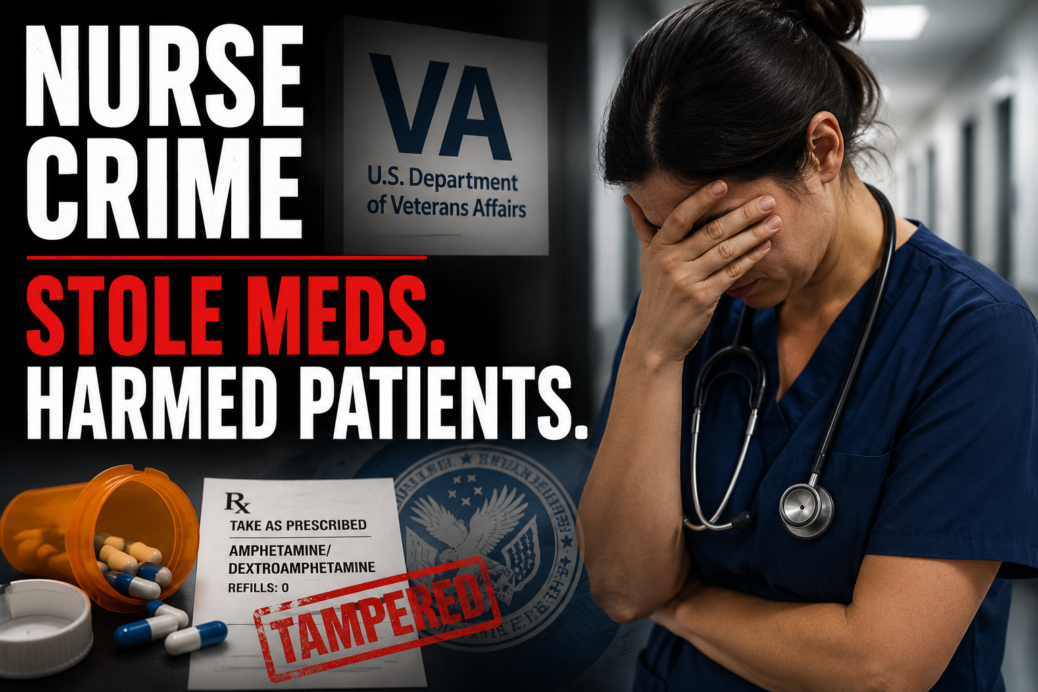
The nurse, Kimberly A. Cotto, worked at the Veterans Administration Medical Center in White River Junction, Vermont. According to federal prosecutors, she diverted stimulant medications prescribed to psychiatric patients over several months and replaced some of them with completely different drugs. The crimes took place between March and November 2025. (vermontbiz.com)
For many nurses, this case is one of the most disturbing forms of drug diversion.
Why?
Because the victims were psychiatric patients — a group already vulnerable, often dependent on medication stability, and sometimes unable to fully advocate for themselves.
That makes this more than theft.
It makes it a direct attack on patient trust.
How the VA Nurse Stole Patient Medication
According to prosecutors, Cotto admitted to taking amphetamine and dextroamphetamine capsules prescribed to patients.
These medications are commonly used for attention disorders and certain psychiatric conditions.
But instead of administering them as prescribed, she reportedly opened the capsules and removed all or most of the active drug.
She then closed the capsules and returned them so they could still be given to patients.
That means patients were swallowing capsules they believed contained their medication — when in reality they had little or none of the treatment they needed.
That is what makes this case especially dangerous.
The deception was hidden.
Patients likely had no idea.
Staff may not have noticed immediately.
But their bodies did.
And their symptoms did.
Patients Began to Deteriorate
Court documents reveal that at least one psychiatric patient experienced worsening symptoms after the diversion.
Prosecutors say the patient began hearing more voices and displayed increasingly uncontrolled behaviour on at least two occasions.
That matters.
Because psychiatric medications are often carefully adjusted over time.
Missing doses or receiving reduced medication can trigger:
- hallucinations
- emotional instability
- agitation
- aggression
- panic episodes
- relapse
For psychiatric patients, medication consistency can be the difference between stability and crisis.
And according to prosecutors, Cotto knew this.
She knew taking the medication could worsen their condition.
But did it anyway.
Replacing Medication With Something Else
The case became even more serious when investigators discovered Cotto also tampered with methylphenidate.
Instead of giving patients their prescribed stimulant medication, she admitted to replacing it with hydroxyzine.
That is a completely different drug.
Hydroxyzine is often used for anxiety, itching, or sedation.
It is not a substitute for stimulant therapy.
This means patients were unknowingly given medication that could alter their mental state, sedation level, and treatment plan.
That is incredibly dangerous.
It also destroys the entire integrity of medication administration.
Imagine a patient deteriorating and doctors trying to figure out why — not knowing the prescribed treatment had been swapped.
That wastes critical time.
And in mental health care, time matters.
Why This Case Hits Harder
Drug diversion cases happen.
But psychiatric patient diversion hits differently.
These patients are often already battling:
- schizophrenia
- severe depression
- bipolar disorder
- trauma
- psychosis
Many depend on medication to function.
To sleep.
To feel safe.
To stay grounded.
Tampering with that care can push someone into crisis.
That is why this case feels heavier than many others.
It wasn’t just about getting high.
It came at the cost of vulnerable people.
The Charges and Guilty Plea
Cotto has now pleaded guilty to:
- tampering with consumer products
- obtaining controlled substances through fraud
Under her plea deal, she agreed to surrender her New Hampshire nursing licence.
She has also agreed to forfeit proceeds connected to the crimes.
Federal prosecutors say the plea agreement recommends a maximum of 24 months in prison, though the judge will decide the final sentence.
The legal maximum is much higher:
- up to 14 years in prison
- fines of up to $500,000
Sentencing is scheduled for October 2026.
For a nurse with decades of experience, this is a devastating fall.
The Bigger Problem: Addiction in Nursing
This case once again highlights a difficult truth:
Substance misuse exists in nursing.
And many nurses suffer silently.
Long hours.
Burnout.
Emotional trauma.
Chronic stress.
Easy drug access.
All of these create risk.
According to reports, Cotto had previously sought treatment for substance abuse.
That does not excuse what happened.
But it reminds us that intervention matters.
Because by the time diversion starts, patients may already be in danger.
Healthcare systems must do better at identifying early warning signs.
Why This Matters for Nurses
Every nurse should pay attention to this case.
Medication administration is sacred.
Patients trust us.
They trust that the tablet, capsule, or injection we give them is exactly what was ordered.
Not altered.
Not stolen.
Not replaced.
That trust is one of the foundations of nursing.
And when it’s broken, the damage spreads.
Not just to the patient.
To the profession.
To public confidence.
To every honest nurse working with integrity.
Cases like this also mean tighter audits, stricter controls, and more suspicion in clinical settings.
The innocent often carry the burden of someone else’s actions.
Lessons for the Nursing Profession
This case carries important lessons:
Protect vulnerable patients fiercely
Psychiatric patients need advocacy.
Take addiction seriously
Support nurses before they spiral.
Never ignore medication discrepancies
Small red flags can reveal major harm.
Protect your licence
One decision can destroy an entire career.
Final Thoughts
This case is deeply troubling.
Because the victims weren’t random.
They were psychiatric patients relying on treatment to keep them stable.
And the person entrusted with their care became the one putting them at risk.
That is a betrayal difficult to understand.
Nursing is not just about giving medication.
It’s about stewardship.
Trust.
Protection.
And when that trust is abused, patients pay the highest price.
That is why this story matters.