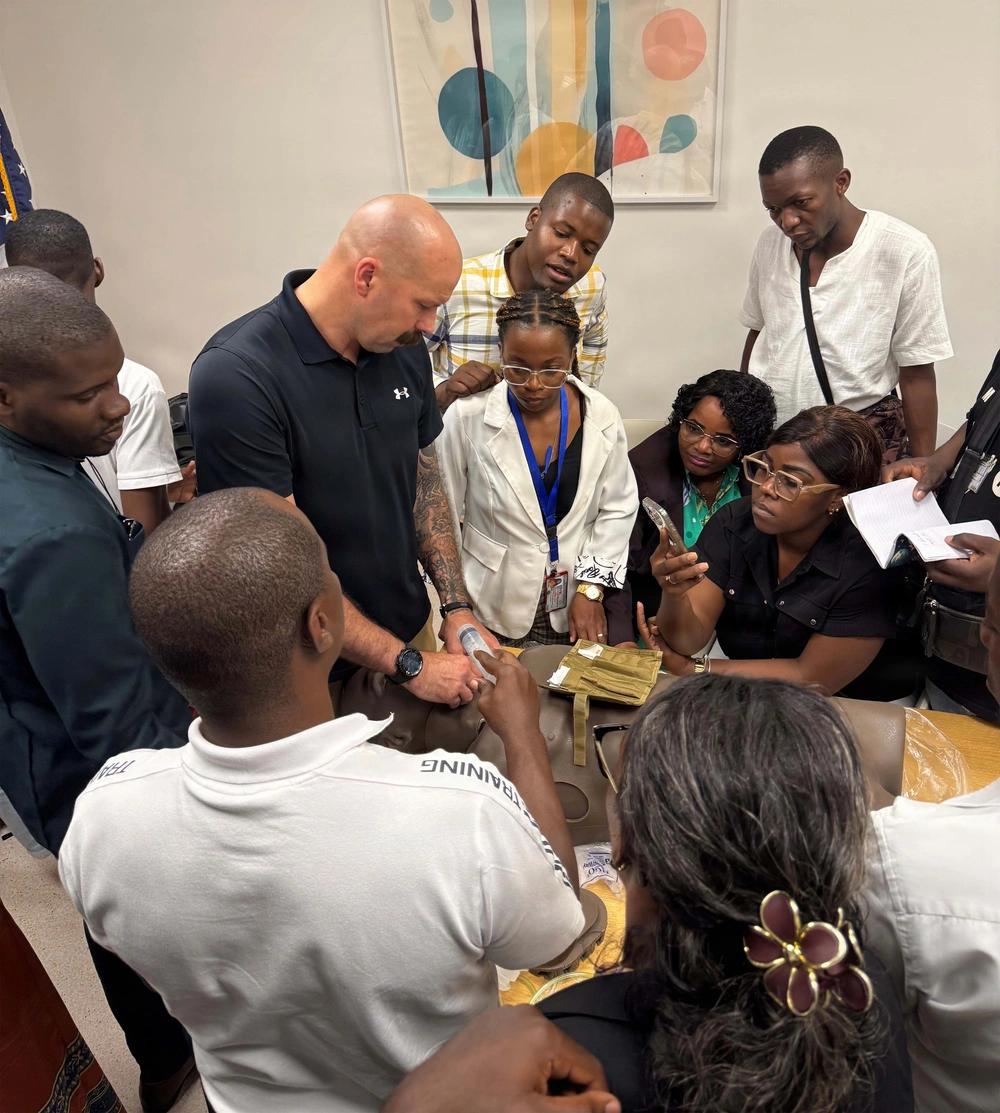
A senior US Navy nurse has been recognised for taking his expertise beyond American borders to support critical nursing education in Africa, highlighting the growing importance of international collaboration in emergency healthcare training.
Patrick Marsh, a Lieutenant Commander assigned to Naval Hospital Jacksonville, recently travelled to Luanda, Angola, where he led an intensive trauma nursing and surgical trauma training programme for African military nurses and healthcare professionals. The initiative was part of a broader effort aimed at strengthening trauma response capabilities in the region.
Marsh, who currently serves as Associate Director of Medical Services at the Florida-based military hospital, was specially selected to lead the training because of his extensive experience in trauma nursing, emergency medicine, and mass casualty preparedness.
The two-week programme took place at the Angola Armed Forces Military Hospital and covered 18 key topics related to trauma nursing, emergency transport care, and mass casualty response. According to reports, the training was designed not only to improve clinical knowledge but also to adapt best practices to the realities of healthcare environments where resources may be significantly more limited.
Speaking on the experience, Marsh explained that one of the greatest challenges was adjusting his teaching to fit the practical limitations of the Angolan healthcare system.
While many trauma protocols in the United States rely on advanced equipment and rapid specialist support, African healthcare professionals often have to manage severe emergencies with fewer resources. This meant that the training focused heavily on adaptability, critical thinking, and making life-saving decisions under pressure.
What made the mission even more remarkable was what happened shortly after the training ended.
Just three days after completing the course, one of the nurses who had participated found herself in a real-life mass casualty situation involving 18 patients, many of them critically injured. Marsh later revealed that the nurse said the training had prepared her to handle the incident with far greater confidence and effectiveness.
For many in the nursing profession, this serves as a powerful reminder of how education can directly save lives.
Trauma nursing remains one of the most specialised and high-pressure areas of healthcare. Whether in military settings, civilian emergency departments, or disaster zones, nurses trained in trauma response are often the first line of defence in stabilising patients during life-threatening situations.
International training exchanges such as this also demonstrate the increasingly global nature of healthcare education. As emergency medicine evolves, partnerships between nations are becoming vital for sharing expertise, improving standards of care, and building resilience in healthcare systems across the world.
Marsh’s leadership was praised by senior Navy officials, who highlighted not only his clinical excellence but also his commitment to advancing nursing knowledge on a global scale. His ability to teach across language and cultural barriers was described as an example of the wider role nurses can play beyond bedside care.
With more than two decades of service and having travelled to over 100 countries throughout his career, Marsh’s work reflects the diverse opportunities available within military nursing.
For African nurses, the programme represented more than just education — it was an opportunity to gain practical skills that could make the difference between life and death in emergency situations.
For the wider nursing profession, the story stands as a reminder that nursing knowledge has no borders. Whether in the United States, Angola, or elsewhere, the ability to train, equip, and empower nurses remains one of the profession’s greatest strengths.
As healthcare challenges continue to grow globally, stories like this reinforce the critical role nurses play not just in patient care, but in shaping the future of medicine worldwide.