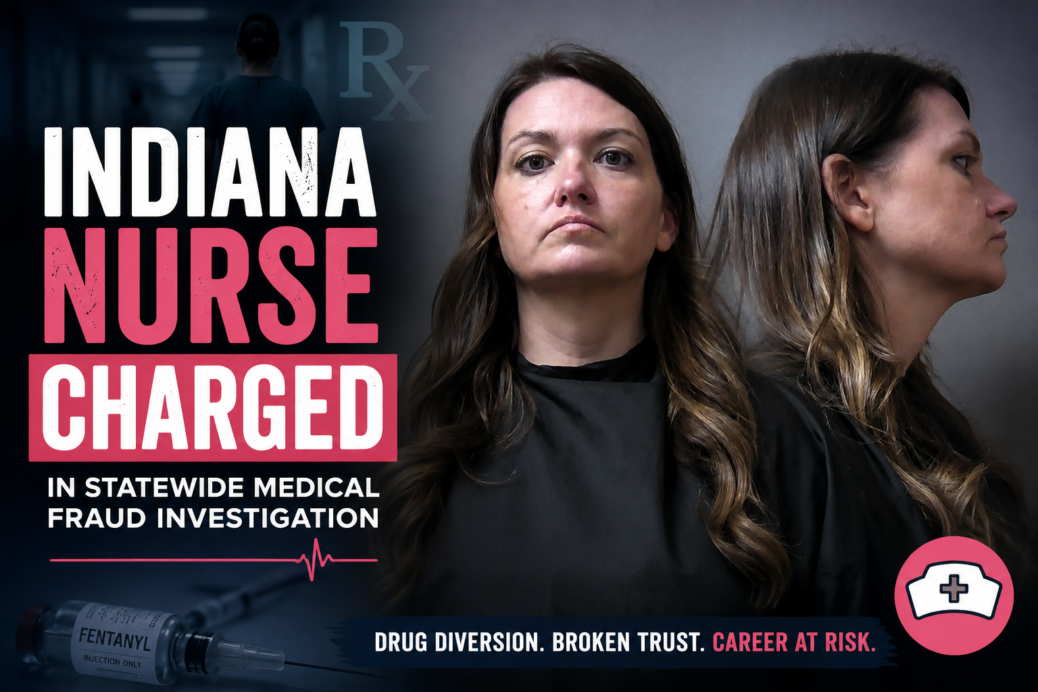
Indiana Nurse Charged in Major Medical Fraud Investigation Over Alleged Fentanyl Diversion
A registered nurse from Indiana is among several healthcare workers now facing criminal charges as part of a wider statewide medical fraud investigation.
Brandy Rifner, 42, of Fishers, Indiana, has been charged with felony offences after investigators alleged she diverted powerful opioid medications meant for patients and used them herself.
The case is part of Indiana’s involvement in the largest healthcare fraud takedown in U.S. history, with hundreds of cases being investigated nationwide.
For nurses, this is another sobering reminder of how seriously medication diversion is treated — and how quickly a career can unravel.
What Is She Accused Of?
According to investigators, Rifner worked as a registered nurse at Community Hospital Anderson, where an internal investigation reportedly triggered the complaint to state authorities.
The allegations claim she improperly obtained controlled substances, including:
- Fentanyl
- Hydromorphone
Both drugs are powerful opioid medications used for severe pain management.
Hydromorphone is significantly stronger than morphine.
Fentanyl is even more potent and highly monitored in healthcare settings because of its risk for overdose and abuse.
Investigators allege Rifner diverted the medication and later admitted to taking it for personal use during questioning.
She now faces felony charges of:
- Obtaining a controlled substance by fraud
- Furnishing false information
She has since posted bail and is awaiting her next court hearing.
This Was Not an Isolated Case
Rifner was not the only healthcare worker charged.
The broader Indiana investigation led to multiple arrests involving nurses, aides, and healthcare workers accused of:
- Drug diversion
- Record falsification
- Identity deception
- Theft from vulnerable patients
Several other nurses across Indiana were accused of diverting:
- Oxycodone
- Hydrocodone
- Lorazepam
- Tramadol
- Clonazepam
This shows a troubling pattern.
And it is why healthcare fraud units are increasing surveillance.
Why Drug Diversion Is So Serious in Nursing
Drug diversion happens when medication intended for a patient is taken, misused, or redirected.
In nursing, this can happen in different ways:
- Removing medication without administration
- Charting false wastage
- Swapping medication
- Falsifying signatures
- Withholding pain relief from patients
This is one of the most dangerous professional violations.
Because it affects both:
1. Patient Safety
A patient expecting pain relief may receive nothing.
Or worse — an altered medication.
That can delay treatment, increase suffering, or cause deterioration.
2. Nurse Safety
Many diversion cases involve underlying addiction.
Without intervention, the cycle often escalates.
What starts as one dose can become dependency.
And dependency can destroy everything.
The Hidden Crisis of Nurse Addiction
This is the part people often ignore.
Nursing is a high-pressure profession.
Long shifts.
Trauma exposure.
Burnout.
Mental exhaustion.
Access to controlled substances.
That combination can be dangerous.
Studies have shown nurses are at increased risk of substance misuse compared to many professions because of both access and stress.
That does not excuse diversion.
But it helps explain why some fall into it.
Sometimes what looks like misconduct begins as untreated pain, anxiety, depression, or trauma.
What Happens to a Nurse After Charges Like This?
Cases like this can have devastating consequences.
Possible outcomes include:
- Suspension of nursing licence
- Permanent licence revocation
- Criminal conviction
- Prison time
- Loss of employment
- Difficulty returning to healthcare
Even before conviction, most boards begin investigating immediately.
For many nurses, the professional fallout begins long before court.
What Nurses Should Learn From This
This case carries important lessons.
Protect your licence
Your nursing licence is your livelihood.
One bad decision can cost years of work.
Seek help early
If you are struggling with stress, addiction, or burnout, ask for support before it becomes a crisis.
Never cut corners with narcotics
Controlled substances are heavily tracked.
Discrepancies are almost always discovered.
Watch for warning signs in colleagues
Diversion often has patterns:
- frequent med discrepancies
- volunteering for narcotic-heavy assignments
- excessive wasting
- unusual behaviour
Early intervention matters.
Final Thoughts
The Indiana case is serious.
A nurse now facing criminal charges.
Patients potentially affected.
A career hanging in the balance.
It is easy to read stories like this and judge quickly.
But beneath many diversion cases is often a deeper story of stress, addiction, and collapse.
Nursing is a profession built on trust.
And once that trust is broken, the consequences can be life-changing.
For every nurse reading this:
Protect your peace. Protect your practice. Protect your licence.