Whistleblower Lawsuit Alleges Pennsylvania Nurse Worked While High and May Have Contributed to Two Patient Deaths
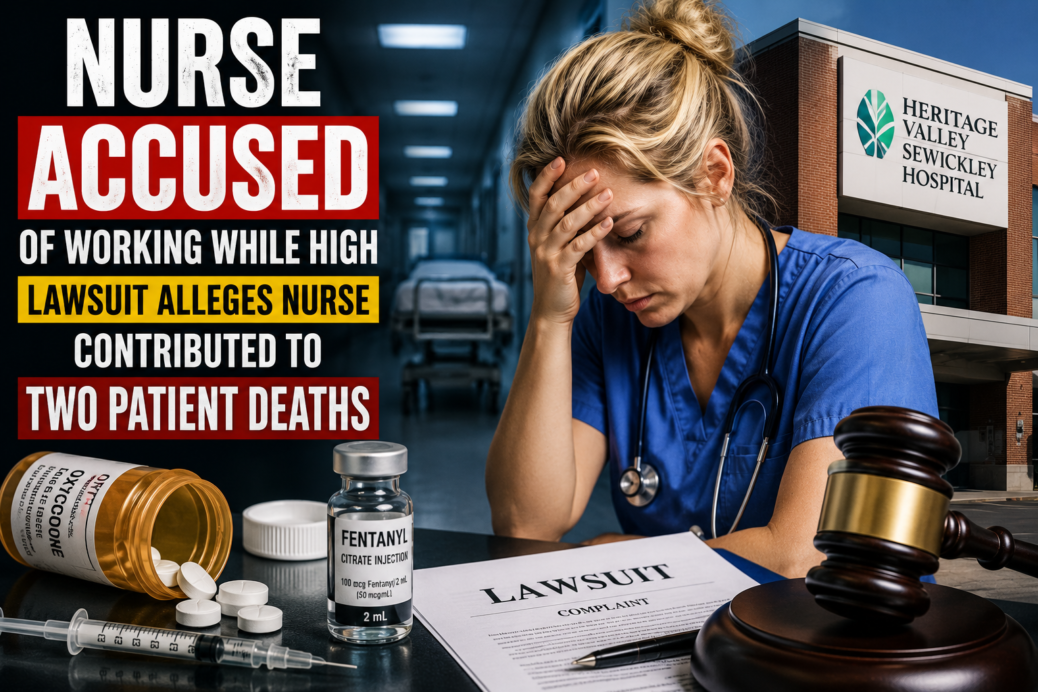
A Pennsylvania hospital is facing a major federal lawsuit after two nurses came forward with allegations that an emergency room nurse was working while under the influence of drugs and may have contributed to the deaths of two patients.
The case centres on Heritage Valley Sewickley Hospital, where whistleblower nurses claim hospital leadership ignored repeated warnings about a fellow nurse’s alleged substance abuse and drug diversion for months before action was taken.
According to a new report by WPXI, the lawsuit alleges that emergency room nurse Nolan Chismire repeatedly stole narcotics meant for patients and used them while on shift, sometimes inside hospital bathrooms and even in his car during breaks.
The complaint was filed by two nurses who say they reported the behaviour to hospital management multiple times but were allegedly met with retaliation rather than support.
Court documents claim Chismire diverted powerful controlled substances, including pain medications and sedatives intended for emergency room patients. In some instances, the lawsuit alleges he replaced medications with saline or falsified medical records to make it appear that patients had received their prescribed treatment.
Whistleblowers argue that this put patients at serious risk — and in two cases, may have had deadly consequences.
While the lawsuit does not publicly disclose full medical details of the two patients who died, the nurses claim the impaired care and medication tampering contributed to fatal outcomes.
The allegations have sent shockwaves through Pennsylvania’s healthcare community, as drug diversion remains one of the most serious threats to patient safety.
Drug diversion occurs when healthcare workers steal medications meant for patients for personal use or illegal distribution. In hospitals, it can have devastating consequences because patients may receive incorrect doses, delayed treatment, or no medication at all.
In emergency settings, where seconds matter, missing or tampered medication can be the difference between life and death.
The lawsuit also accuses hospital leadership of negligence.
According to the complaint, administrators at Heritage Valley Health System allegedly failed to properly investigate despite multiple reports and warning signs, allowing the nurse to continue treating vulnerable patients.
Even more concerning, the whistleblowers claim federal investigators had already visited the hospital earlier this year, but the alleged diversion continued afterward.
The lawsuit also raises possible healthcare fraud concerns.
The complaint alleges that documentation was falsified to conceal stolen medications, which could potentially expose the hospital to broader legal and regulatory scrutiny if proven.
Beyond the patient deaths, the two whistleblower nurses say they suffered retaliation for speaking out.
They claim their work environment changed after making reports and that leadership failed to protect them despite their concerns being directly related to patient safety.
Whistleblower retaliation cases in healthcare often attract serious attention because staff members are often the first to identify dangerous practices before patients are harmed.
Experts say these cases highlight the importance of robust internal reporting systems and immediate intervention when impairment concerns arise.
Substance abuse among healthcare workers is a difficult but well-documented issue.
Studies estimate that around 10% of healthcare professionals may struggle with substance misuse at some point in their careers, but strict monitoring and early intervention are meant to prevent harm to patients.
When those systems fail, the consequences can be catastrophic.
Neither Chismire nor hospital executives have publicly commented in detail on the allegations.
At this stage, the lawsuit remains in its early phases, and all allegations remain unproven until tested in court.
However, the seriousness of the claims — including two deaths, drug diversion, and whistleblower retaliation — means the case is likely to draw significant attention as it moves forward.
For the families of the patients involved, the lawsuit could bring answers about whether earlier intervention could have prevented tragedy.
For hospitals nationwide, it serves as another stark reminder that patient safety must always come before protecting reputations.