UAE NICU Nurse Saves Cancer Patient During Mid-Air Medical Emergency on Dubai–India Flight
What began as a routine flight home quickly turned into a life-threatening emergency when a passenger recovering from breast cancer surgery became critically ill shortly after take-off.
Fortunately, an experienced UAE neonatal intensive care unit (NICU) nurse was onboard.
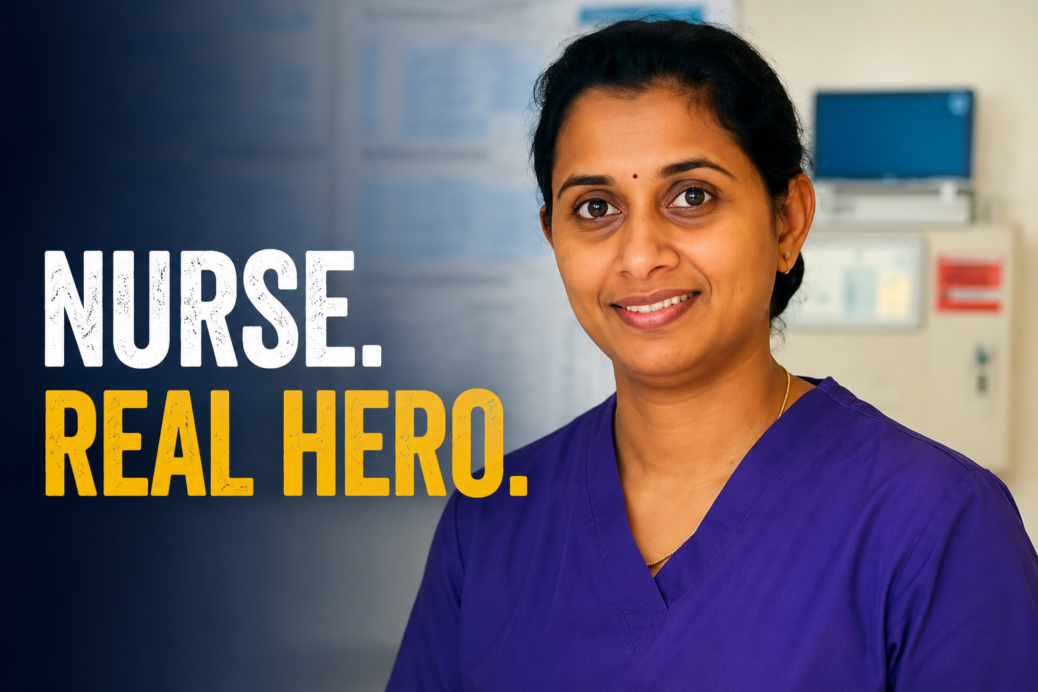
Without hesitation, Pooja Rajakumaran, an Indian expatriate nurse working at RAK Hospital in Ras Al Khaimah, stepped forward after cabin crew made an urgent announcement asking whether a doctor or nurse was on the aircraft.
Her quick thinking and calm assessment helped stabilize the passenger and prevented what could have become a medical emergency at 35,000 feet.
A Routine Flight Suddenly Turned Into an Emergency
The incident occurred on July 1 aboard an Air India Express flight travelling from Dubai to Thiruvananthapuram, India.
Just minutes after take-off, flight attendants made an emergency announcement requesting medical assistance from any healthcare professionals onboard.
Rajakumaran immediately left her seat and responded.
“As a nurse, your instinct is simple—when someone needs help, you go,” she recalled.
Passenger Recovering From Breast Cancer Surgery
The patient was a wheelchair-bound woman who had recently undergone a mastectomy and physiotherapy in Dubai as part of her breast cancer treatment.
By the time Rajakumaran reached her, the woman was drifting in and out of consciousness.
The nurse quickly recognized several concerning symptoms.
According to Rajakumaran, the passenger had:
- A weak pulse
- Severe dizziness
- Extremely cold hands
- Continuous shaking
- Episodes of reduced consciousness
“I knew I couldn’t waste even a second,” she said.
Relying Only on Training and Experience
Unlike a hospital intensive care unit, the aircraft offered very limited medical equipment.
There were no cardiac monitors, laboratory tests, imaging equipment, or specialist medical teams available.
Instead, Rajakumaran relied entirely on her clinical assessment skills developed through years of caring for critically ill newborns in the Neonatal Intensive Care Unit (NICU) at RAK Hospital.
For nearly the entire flight she remained beside the passenger, repeatedly checking her pulse manually, talking to keep her awake, encouraging hydration with water, and gently massaging her hands to improve circulation and restore warmth.
She later explained that remaining calm was just as important as providing clinical care.
“If I stayed calm, everyone else would stay calm too,” she said.
Should the Flight Have Been Diverted?
As the passenger’s condition remained concerning, a senior member of the cabin crew asked Rajakumaran whether the captain should consider diverting the aircraft for an emergency landing.
After performing another careful assessment, the nurse concluded that the passenger was beginning to improve.
Her pulse had become stronger, her body temperature was recovering, and she was becoming more responsive.
Based on her clinical judgement, Rajakumaran believed the woman was suffering primarily from physical exhaustion combined with anxiety, rather than a life-threatening condition requiring immediate diversion.
The captain therefore continued the flight safely to its scheduled destination.
Teamwork Helped Prevent Panic
Rajakumaran praised the professionalism of the cabin crew throughout the emergency.
She said flight attendants responded immediately by bringing blankets and water while giving her the space needed to care for the passenger.
She also commended fellow passengers for remaining calm and cooperating throughout the incident.
Their collective response helped prevent panic inside the cabin while allowing the medical situation to be managed safely.
Experience Beyond the Hospital Walls
Although Rajakumaran regularly treats critically ill newborns in the NICU, she described providing emergency care on an aircraft as an entirely different experience.
Inside a hospital, nurses have access to advanced monitoring equipment, emergency medications, oxygen supplies, and multidisciplinary medical teams.
On an aircraft, healthcare professionals often have only their knowledge, clinical judgement, and limited onboard medical supplies.
The experience reinforced how important fundamental nursing assessment skills remain—even in environments with few resources.
A Grateful Passenger
Before landing, Rajakumaran checked on the passenger one final time.
This time, the woman was smiling.
She thanked the nurse for helping her through the frightening ordeal and told her she felt much better.
For Rajakumaran, seeing the patient safely complete her journey was the greatest reward.
Nursing Doesn’t End When the Shift Ends
Reflecting on the experience, Rajakumaran said healthcare professionals should never hesitate to respond when someone needs help, regardless of whether they are on duty.
She encouraged fellow nurses to trust their training and remember that opportunities to save lives can arise anywhere—not just inside hospitals.
Her actions also highlight the vital role nurses play during public emergencies, where calm decision-making and clinical judgement can make all the difference.
This is not the first time UAE nurses have been recognised for responding to emergencies while off duty. Earlier this year, other nurses working in the UAE also helped save passengers during separate in-flight medical emergencies, reinforcing the profession’s commitment to patient care wherever it is needed.