FBI Adds Healthcare Fraud Fugitive Emylee Thai to Most Wanted List Over $95 Million Medicare Scheme
Federal authorities have intensified their crackdown on healthcare fraud after adding healthcare executive Emylee Thai to the FBI’s Most Wanted Fraudsters list in connection with an alleged multimillion-dollar Medicare fraud scheme.
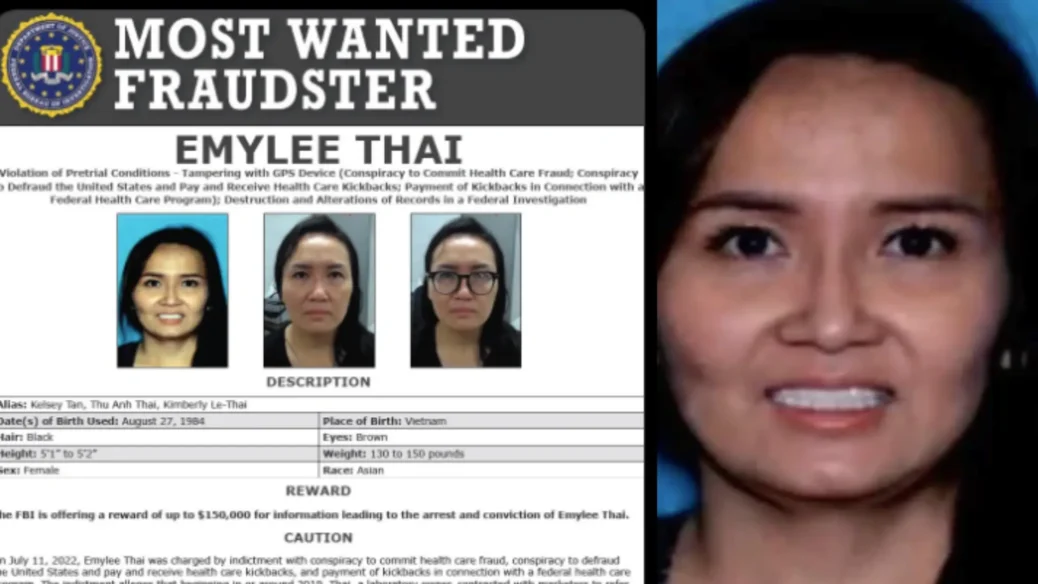
The Emylee Thai Medicare fraud case has attracted national attention after investigators accused the Texas laboratory owner of orchestrating a large-scale fraudulent genetic testing operation that billed Medicare approximately $142 million, with nearly $95 million paid out by the federal programme. The FBI has now placed Thai among its highest-priority healthcare fraud fugitives and is offering a reward of up to $150,000 for information leading to her arrest.
What Happened in the Emylee Thai Medicare Fraud Case?
According to federal investigators, the Emylee Thai Medicare fraud scheme dates back to 2019 when Thai allegedly operated a laboratory involved in genetic testing referrals.
Prosecutors claim Thai worked with marketers who provided physician orders and DNA samples from Medicare beneficiaries in exchange for kickbacks tied to reimbursements. Authorities allege that many of these genetic tests were medically unnecessary and were often not used for actual patient treatment decisions.
Healthcare fraud involving unnecessary testing has become a major focus for federal agencies in recent years because it not only drains taxpayer resources but also exploits vulnerable elderly patients.
Federal court documents suggest that after being indicted in 2022, Thai violated her pretrial conditions by tampering with her GPS ankle monitor before fleeing the United States. Investigators believe she may currently be hiding in Vietnam under a false identity.
The Emylee Thai Medicare fraud case is now considered one of the most significant unresolved Medicare fraud investigations linked to genetic testing abuse.
Why the Emylee Thai Medicare Fraud Case Matters
The healthcare sector relies heavily on public trust, particularly in federally funded programmes like Medicare and Medicaid.
The Emylee Thai Medicare fraud case highlights how financial exploitation within healthcare can affect not only government resources but also patient care.
When fraudulent claims are submitted for medically unnecessary services, it increases costs for the entire healthcare system and may divert resources away from patients who genuinely need care.
In recent years, genetic testing fraud has emerged as one of the fastest-growing forms of Medicare abuse. Fraudsters often target elderly patients, convincing them to submit DNA samples under false pretences.
These schemes frequently involve aggressive marketing tactics, misleading paperwork, and kickback arrangements between labs and referral agents.
Federal authorities say this pattern makes cases like Thai’s especially damaging.
The FBI’s Growing Healthcare Fraud Crackdown
The Emylee Thai Medicare fraud case comes during a period of aggressive federal enforcement.
The U.S. Department of Justice recently announced the results of its 2026 National Health Care Fraud Takedown, which led to charges against 455 defendants connected to over $6.5 billion in false claims. This marks one of the largest healthcare fraud operations in U.S. history.
The FBI’s Most Wanted Fraudsters list was created to increase public awareness and accelerate the capture of major fraud fugitives.
Thai’s inclusion on the list signals how seriously authorities are treating large-scale Medicare fraud.
FBI Director Kash Patel recently emphasized that healthcare fraud remains a top national priority due to its impact on taxpayers and vulnerable populations.
Wider Lessons for Healthcare Professionals
Although the Emylee Thai Medicare fraud case centres on a laboratory owner rather than a nurse, the implications reach across the entire healthcare profession.
Nurses, physicians, laboratory teams, and administrators all play critical roles in maintaining ethical standards.
Cases involving fraudulent billing serve as reminders of the importance of compliance, transparency, and patient-first care.
Healthcare professionals must remain vigilant when reviewing testing orders, referrals, and reimbursement practices.
For nurses in particular, understanding how healthcare fraud operates is becoming increasingly important as documentation, coding, and care coordination continue to expand.
The Emylee Thai Medicare fraud case serves as a warning about how quickly unethical practices can escalate into federal criminal investigations.
As the search for Thai continues, federal officials are urging anyone with information to come forward.
For the wider healthcare community, the case stands as another powerful reminder that protecting public trust is just as important as delivering care.